
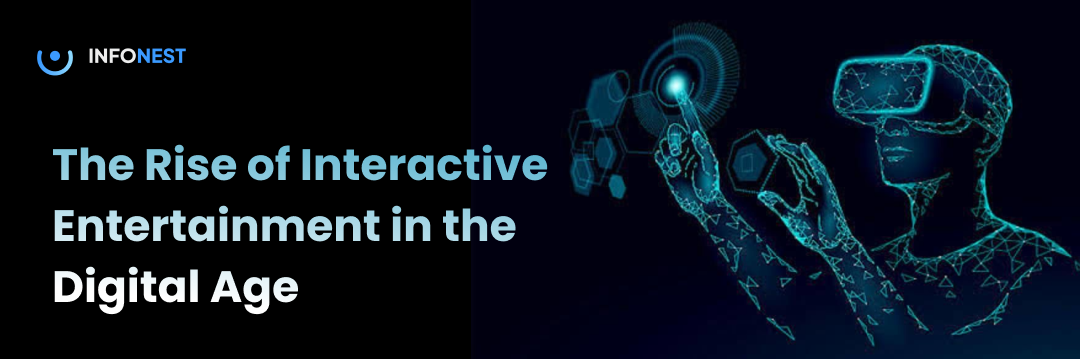
Entertainment has changed a lot over the years. In the past, people mostly watched movies, listened to music, or read books. It was a one-part experience – you watched, listened to, and read, but you did not really join.
Updated on July 27, 2026
Entertainment has changed a lot over the years. In the past, people mostly watched movies, listened to music, or read books. It was a one-part experience – you watched, listened to, and read, but you did not really join.
Today, things are very different.
We are now in the digital age, where entertainment is not just something we watch. It is engaging, which means people can join in, make choices, and control what happens next.
From video games to virtual reality and social media, interactive entertainment is everywhere. But why is this change happening? And why do people like it so much?
Let’s look at how interactive entertainment is growing and why it is the future of digital content.
Interactive entertainment is any form of content where users can actively participate rather than just watch.
For example:
Rather than being just viewers, users become part of the experience.
This type of content gives people some control over. They are not just content creators but also help shape it.
The rise of interactive entertainment in the digital age is not random. There are clear reasons behind its fast growth.
Modern devices like smartphones, smart TVs, and gaming have made it easier to interact with content. Fast internet and advanced apps allow real-time participation without waits.
People today do not go to just watch–they go to engage. Related content keeps users engaged for longer times, which is why platforms focus on it more.
Interactive entertainment many times adds sharing, commenting, or playing with others. This creates a sense of link and connection.
Users can select what they like, skip what they do not, and create their own experiences. This makes entertainment more enjoyable and relevant.
Interactive entertainment comes in many forms. Some of the most popular ones include:
Video games are one of the most important examples. Players make plans, complete tasks, and control characters. Games today are better and more engaging than ever.
Platforms like Daily Video Well allow users to interact with creators in real time through comments, reactions, and chats.
Some platforms offer shows where viewers can select what happens next. This turns watching into a more engaging activity.
Polls, quizzes, reels, and interactive posts on social media inspire users to share for daily activity.
These technologies create interesting experiences where users feel like they are inside the content.
Interactive entertainment is not just fun—it also changes how people think and behave.
It improves:
When users join in, they feel closer to the content. This makes the experience more memorable than regular entertainment.
Interactive entertainment offers many advantages:
For businesses and content creators, it also helps grow user control and visibility.
While interactive entertainment has many benefits, it also comes with some challenges.
Even with these challenges, its growth continues fast.
The future of entertainment is clearly moving toward more interaction.
With the growth of:
Interactive experiences will become even better and more engaging.
In the future, users may not just watch stories—they may fully experience them.
The rise of interactive entertainment in the digital age shows how user behavior is changing. People no longer want to sit back and watch—they want to be taking part in.
Interactive entertainment offers:
It turns simple content into an experience.
As technology continues to improve, interactive entertainment will only grow stronger. Whether it’s gaming or social media, one thing is clear:
The future of entertainment is interactive.
Fresh ideas, daily habits, and practical guides to help you live a more relaxed, focused, and balanced life.
 Entertainment
 has changed a lot over the years. In the past, people mostly watched movies without any interaction. It was simple–sit, watch, and enjoy. Today, things are very different. Moder entertainment is no longer just about watching movies. It is about taking part, engaging, and experiencing content in new ways.
Read Article Entertainment
Online entertainment has changed a lot in recent years. Before, most people just watched movies, TV shows, or video games without getting taken. Now, new technology makes entertainment more interactive and fun.
Read Article Entertainment
 has planned a many in recent years. In the past, people mostly watched movies on television at home. Today, digital entertainment has introduced many new ways to enjoy entertainment. From short videos to related content and online reports, the way people experience entertainment continues to advance.
Read ArticleShare your thoughts about this article. Your email address will never be published.
Welcome Back 👋
Sign in with your Google account to unlock personalized recommendations, save your favorite articles, comment on blogs, and enjoy a faster experience.
By continuing, you agree to our Terms of Service and Privacy Policy.
Comments
Count: 0
No Comments Yet
Be the first to share your thoughts about this article. Your opinion can help other readers and start the conversation.